
 Posted by
 Fair, fit and secure: a review of the benefits of ‘Access and Benefit-sharing’
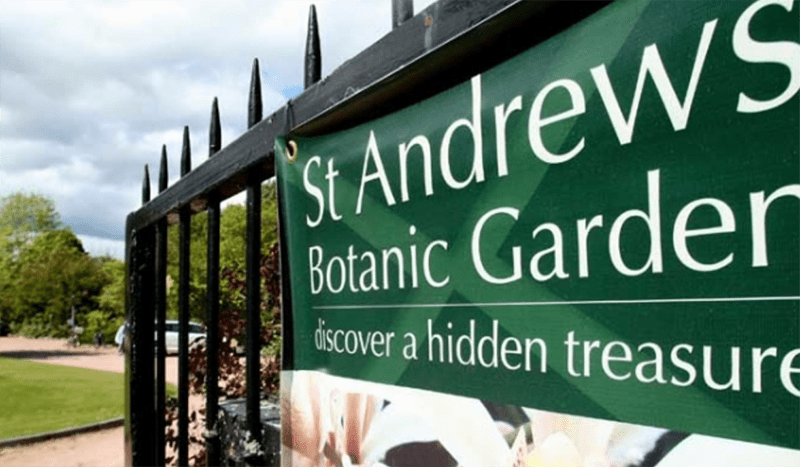
St Andrews Botanic Garden is leading an international project to identify more equitable ways of identifying and trading the seeds needed for the Just Transition to Net Zero.
Trees for tomorrow
Tree planting in our towns and cities is one of the most effective ways of supporting biodiversity and addressing climate change at a local level.
But not all of the trees we currently plant are well-adapted to the conditions we expect to see in the next 70 years and beyond. Choosing and obtaining the most appropriate genetic material for urban tree planting schemes is challenging, and researchers and nurseries are working to identify critical gaps in knowledge.
New tree breeding programmes will be needed and these will need new seed sources. In the past, the profits from using seeds that have become highly valuable in breeding programmes have not always been shared fairly, and recent international legislation (Access and Benefit Sharing, Convention on Biological Diversity) has set out a requirement that more equitable agreements are reached between the seed donor and their trading partners.
However, more progress has been made on securing new genetic resources (access) than the benefit sharing component for trading partners. This challenge is particularly acute for small-scale farmers and organisations that lack the resources to track how breeding programmes develop and where the resulting trees are distributed. St Andrews Botanic Garden will lead a multi-partner project to develop guidance that nurseries and international trading partners can use to facilitate a more just transition to net zero.
In this project, St Andrews Botanic Garden will conduct a consultation process, working with colleagues in the UK and internationally to identify critical barriers to trade, consider the types of trade and compensation that are appropriate and how to navigate critical challenges such as climate change, biosecurity risk and provenance tracing.
This project is supported by Fund4Trees, the Biotechnology and Biological Sciences Research Council, the Urban Plant Lab, and the International Plant Sentinel Network.
Dr Harry Watkins, St Andrews Botanic Garden
“The critical role of Indigenous Peoples and local communities in biodiversity protection was highlighted at COP16 in Colombia: climate change is affecting societies and habitats unequally around the world, and this project will help identify some of the next steps we need to overcome these challenges and provide a legal basis for seeking fair exchanges of plants and plant knowledge.”
Dr Jon Banks, Fund 4 Trees chair of the Research Advisory Committee
“This research will pave the way for greater resilience and diversity in UK and international plant selection, securing a future-proofed genetic foundation for our urban trees. Addressing the practical challenges faced by growers, suppliers, advisors, and purchasers alike, this project aims to tackle the core issues from the ground up, driving meaningful change in importation and selection practices for a more sustainable future”
Lara Saldigo, International Plant Sentinel Network
“As communities around the world look for trees that will survive and thrive under a changing climate, it is essential that equitable trading agreements and biosecure protocols are embedded in all forms of conservation.”
 Fund4Trees